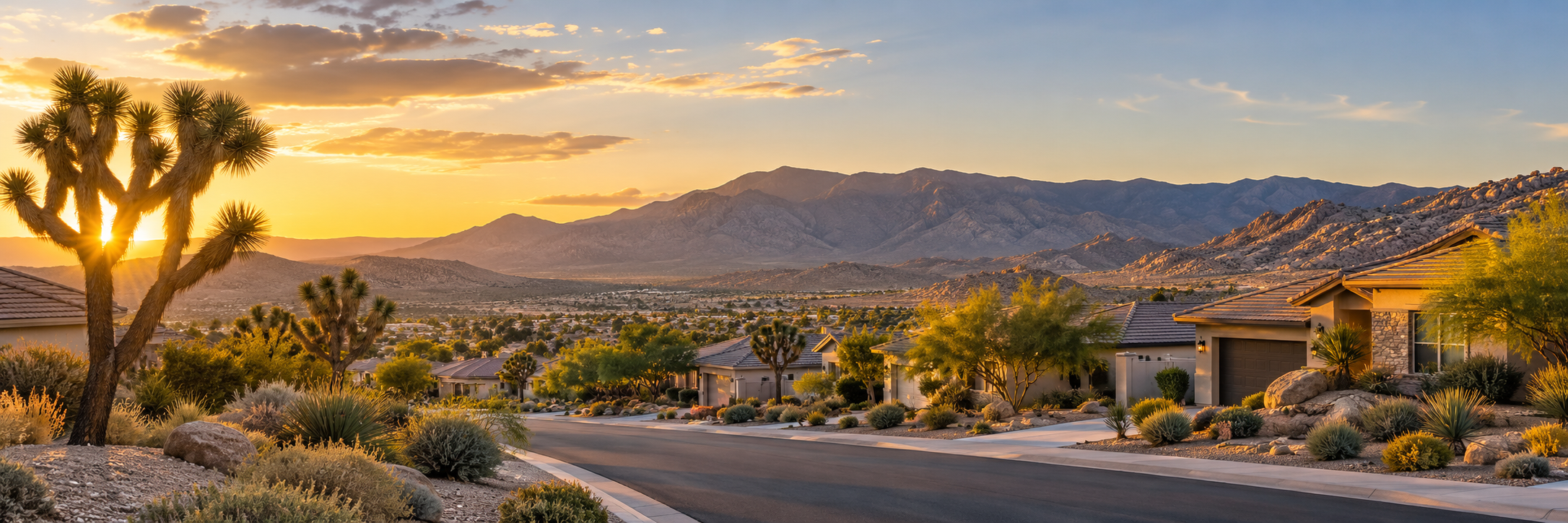
The High Desert offers space, varied housing stock, and a distinct landscape, but property decisions can turn on details that are less visible in a listing: commute patterns, utilities, road access, water and septic, wind, temperature extremes, insurance, solar, and future development.
Treat the High Desert as multiple micro-markets
Victorville, Apple Valley, Hesperia, Barstow, Adelanto, and unincorporated communities differ in lot size, housing age, services, commuting routes, taxes, and buyer demand. Even nearby subdivisions can have different assessments, HOAs, utility providers, and resale patterns.
Use recent comparable properties that actually match location, condition, lot, utilities, and construction—not a broad regional average.
Map the real commute and daily routine
Distance can look manageable on a map while traffic through Cajon Pass or along major corridors changes the experience. Test likely travel times, school and care routes, shopping, medical access, and emergency services at relevant hours.
A lower purchase price may be offset by fuel, vehicle wear, time, and limited alternatives.
Investigate utilities and rural systems
Some properties use septic, wells, propane, private roads, hauled water, or nonstandard utility arrangements. Confirm providers, capacity, condition, permits, maintenance history, and cost.
For vacant land or expansion plans, legal access and the practical cost of power, water, grading, drainage, and septic can determine feasibility.
Plan for climate and site conditions
Heat, freezing nights, wind, dust, drainage, wildfire exposure, and flash-flood zones can affect comfort, maintenance, landscaping, fences, roofs, HVAC, and insurance. Inspect grading and evidence of water flow even in a dry season.
Confirm insurance availability and price early. A lender’s acceptance of coverage does not mean the premium fits the household budget.
Read solar and improvement paperwork
Solar can reduce some utility costs, but buyers should identify whether a system is owned, financed, leased, or subject to a power-purchase agreement. Review transfer terms, production records, roof condition, and any liens.
Investigate additions, garages, conversions, manufactured-home foundations, outbuildings, and accessory units for permits and intended use.
Verify current facts with primary sources
School boundaries, zoning, planned roads, development, taxes, crime data, and utility rules can change. Use city, county, district, utility, insurer, and other primary sources rather than relying on a listing description or social-media post.
A local guide should narrow the questions, not substitute for property-specific investigation.
Practical checklist
- Drive the area at relevant times
- Confirm taxes, assessments, and HOA
- Verify utility providers and systems
- Investigate septic, well, and propane
- Review flood, fire, wind, and drainage
- Price homeowners insurance early
- Read solar transfer documents
- Check permits, zoning, and legal access
Sources and further reading
San Bernardino County property information ↗
California DRE: First-time homebuyers ↗
FEMA Flood Map Service Center ↗
This article is for general educational purposes and is not legal, tax, financial, lending, insurance, inspection, or investment advice. Requirements and programs change, and facts vary by property and transaction. Consult appropriately licensed professionals regarding your circumstances. Edward Rokotyansky is a California REALTOR®, DRE #02199079, with Wiest Realty Inc.